Projects · Aberdare Conservation Area
Mountain Bongo Recovery
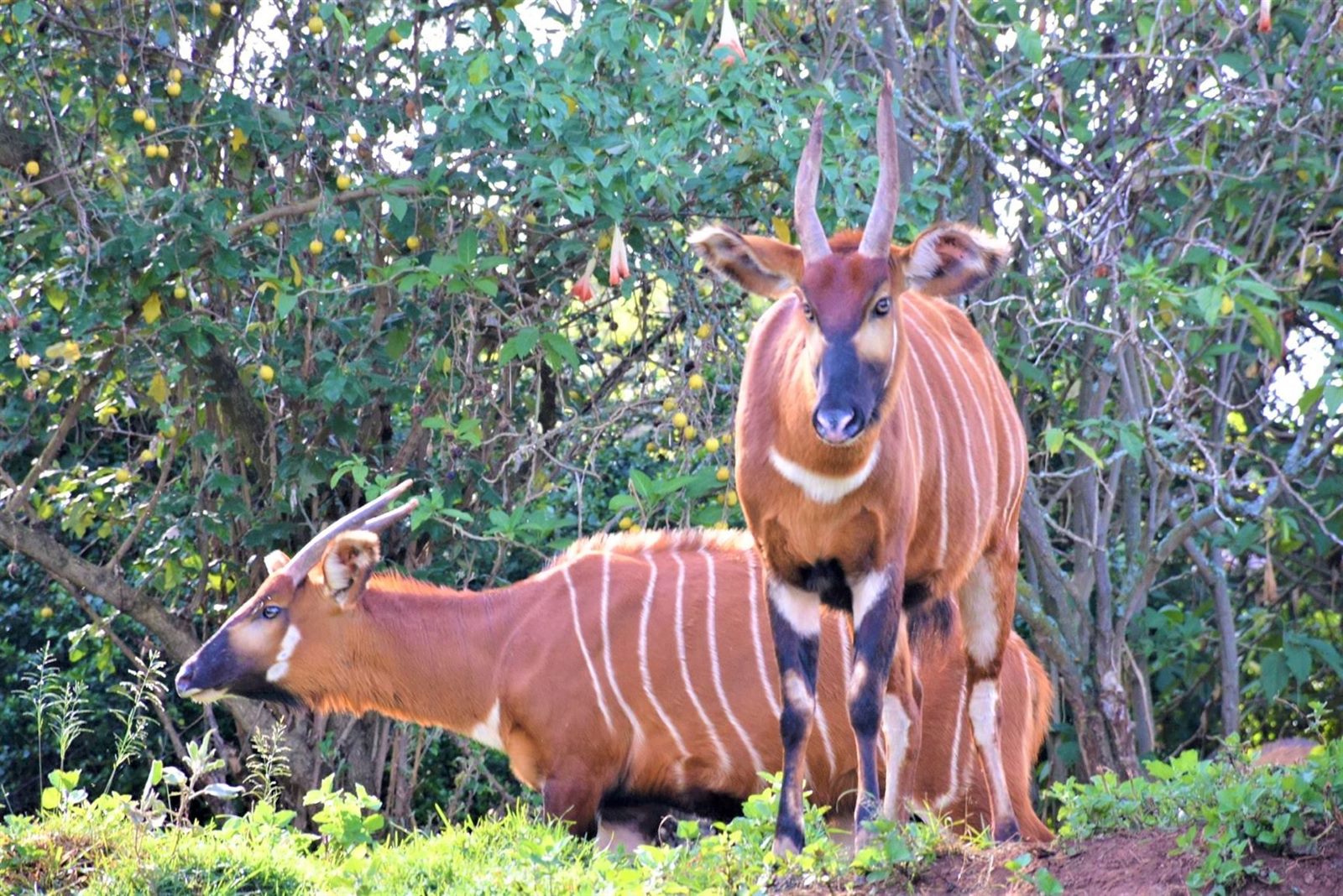
Kenya’s striped forest antelope is down to fewer than 65 wild animals split across four mountain forests. Recovery leans on eyes in the bush, cameras on trails and coordinated breeding partners.
Problem: The mountain bongo (Tragelaphus eurycerus isaaci) lives only in Kenya’s high forests, and field counts point to fewer than 65 animals left in the wild across four separate landscapes. Snares, habitat loss and small isolated groups make natural recovery unlikely without help.
Action: Rhino Ark concentrates field effort on Mount Kenya and Mau Eburu. Fifteen experienced bongo trackers from local communities run regular patrols, remove snares and traps, and record signs of bongo. Community teams also run camera traps and map sightings with GIS, working beside KWS, KFS and the Bongo Surveillance Project. Annual support for one tracker is USD 3,000. Captive herds in Kenya and abroad feed a long-term wild release pathway.
Outcome: Managers get clearer pictures of where bongo persist, neighbours gain paid roles in monitoring, and the national recovery plan ties science, breeding partners and forest-friendly incomes into one practical route back from the brink.
Goals
- Wild population monitoringActive
- Community surveillance capacityActive
- Captive-wild recovery pathwayActive
Partners
- Bongo Surveillance Project
- Kenya Wildlife Service
- Kenya Forest Service
- Wilder Institute / Calgary Zoo
- Mt. Kenya Trust
Evidence
Reports and knowledge products connected to this programme.
- South Western Mau update, 2026
Reports · 2026
- Mau and western Kenya status, September 2026
Reports · 2026
- SMART monitoring briefing
Reports · 2026
- Aberdare status briefing, 2026
Reports · 2026